
Data Science Career Roadmap at MNP Technologies: Skills, Tools, and Real-World Applications
In today’s tech landscape, information is the most valuable asset an organization possesses. From predicting customer behavior to automating complex decision-making, businesses rely heavily on advanced analytics to maintain a competitive edge. As industries accelerate their digital transformations, enrolling in a structured data science course has become a proven gateway to building a high-growth tech career.
Data science combines statistics, computer science, and business domain knowledge to convert raw, unstructured information into actionable insights. Whether you are a fresh graduate or an experienced professional looking to transition into tech, mastering this discipline opens doors to diverse career paths across finance, healthcare, e-commerce, and modern business sectors.
Core Pillars of Modern Data Science
To build a sustainable career in this field, you must master several interconnected technical domains. Understanding how these tools work together is essential for solving real-world business challenges.
1. Programming Languages: Python and R
Programming serves as the engine for all data manipulation and predictive modeling.
- Python: Widely recognized as the industry standard due to its clean syntax and rich ecosystem of libraries like Pandas, NumPy, and Scikit-Learn. A focused curriculum on python for data science helps learners master automated data workflows and algorithm development.
- R: Preferred in statistical research, clinical studies, and heavy data visualization tasks. It provides professionals with advanced techniques for statistical modeling and complex data plotting.
2. Machine Learning and Artificial Intelligence
Machine learning algorithms allow systems to discover patterns from historical data and make automated predictions. Key concepts include:
- Supervised Learning: Classification and regression models used for predicting continuous values or labeling metrics.
- Unsupervised Learning: Clustering techniques like K-Means used for customer segmentation and anomaly detection.
- Deep Learning: Neural network architectures that power advanced tasks like Natural Language Processing (NLP) and Computer Vision.
3. Big Data Processing and Enterprise Analytics
When data volume exceeds the memory capacity of traditional databases, distributed big data frameworks and specialized analytics tools become necessary.
- Hadoop Ecosystem: Frameworks like MapReduce and HDFS allow distributed processing of massive datasets across computing clusters.
- SAS Analytics: Heavily relied upon in enterprise settings, clinical research, and banking for secure statistical management. Completing structured training prepares learners for high-stakes enterprise data handling and risk management.
Technical Skills Matrix: Tools & Business Applications
| Category | Primary Tools | Core Use Cases |
| Programming | Python, R, SQL | Data extraction, automation, statistical testing |
| Machine Learning | Scikit-Learn, TensorFlow | Fraud detection, predictive maintenance |
| Big Data | Hadoop, Apache Spark | Distributed processing, large-scale data storage |
| Enterprise Analytics | SAS, Tableau, Power BI | Financial modeling, executive dashboarding |
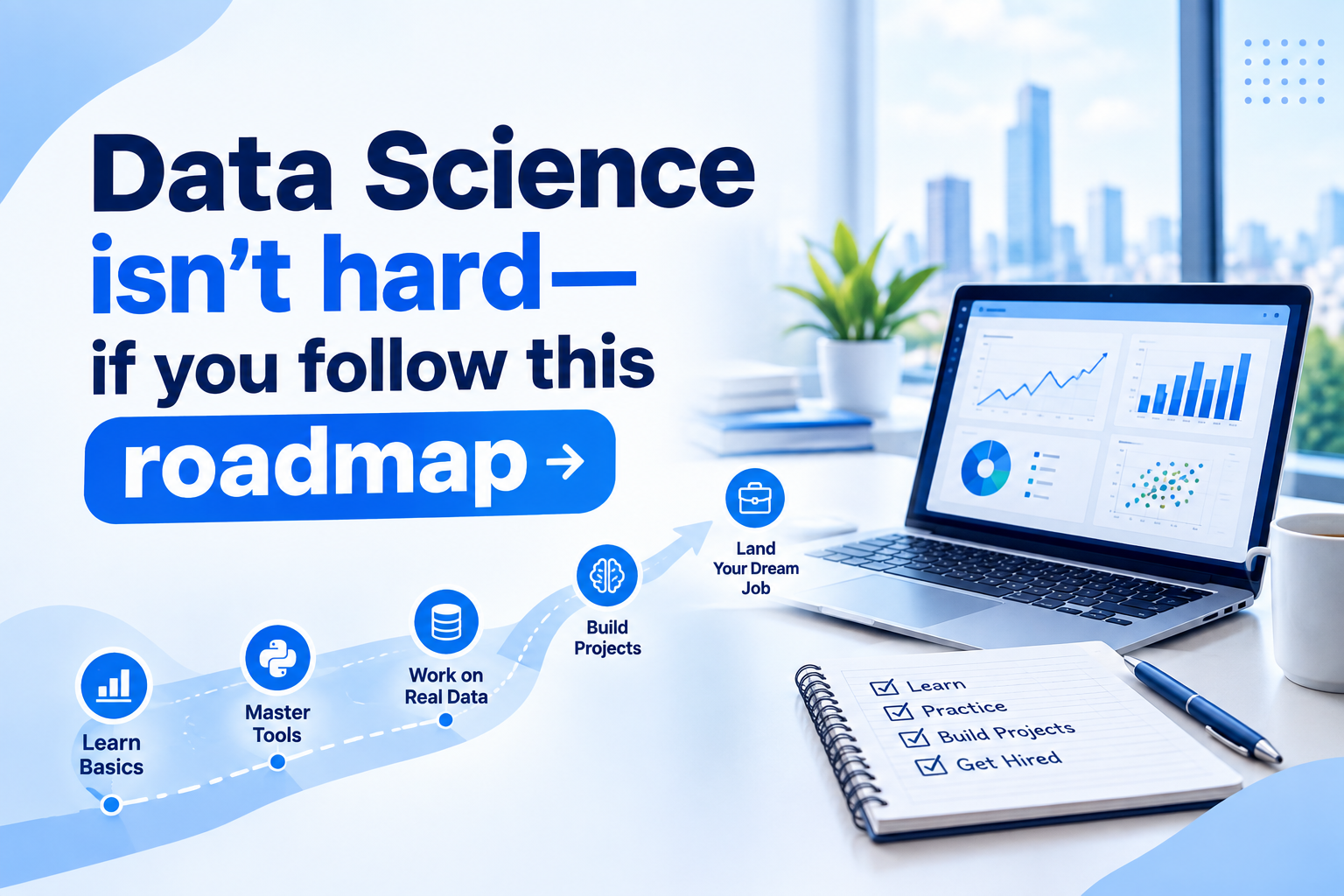
Step-by-Step Roadmap to Launch Your Data Science Career
- Step 1: Master Mathematics and Statistics: Build a solid foundation in linear algebra, multivariable calculus, probability distributions, and hypothesis testing. These mathematical concepts underpin modern machine learning algorithms.
- Step 2: Gain Hands-On Proficiency in Python or R: Learn core syntax, control structures, and object-oriented programming. Focus on data cleaning and feature engineering using tools like Pandas and NumPy.
- Step 3: Learn SQL and Database Management: Relational databases store the vast majority of enterprise data. Mastering SQL joins, subqueries, and aggregation window functions is vital for pulling raw datasets efficiently.
- Step 4: Combine Analytics with Business Strategy: Data insights are useless if they are not communicated effectively. Modern data professionals often work alongside growth teams who leverage user behavior insights, which is why understanding strategies taught in digital marketing modules can give you an edge in marketing analytics and performance tracking.
Actionable Takeaways for Career Transition
- Focus on Problem Solving: Algorithms are just tools; hiring managers care about how effectively you translate raw data into business solutions.
- Showcase a Project Portfolio: Maintain a public GitHub repository hosting 3 to 4 complete data projects with documented code and clean visualizations.
- Stay Updated with AI Integration: Modern professionals must understand how to leverage Large Language Models (LLMs) and Generative AI frameworks alongside traditional statistical modeling.
Frequently Asked Questions
Q1: Can I transition into Data Science from a non-technical or non-coding background?
A: Yes. Many successful data professionals transition from non-technical backgrounds like finance, marketing, or business administration. The key is starting with foundational Python logic, basic SQL querying, and practical statistics before moving to complex machine learning algorithms.
Q2: Which programming language should I learn first, Python or R?
A: Python is generally recommended for beginners due to its intuitive syntax, widespread industry adoption, and seamless integration with production systems and AI frameworks.
Q3: What is the difference between Data Science and Data Analytics?
A: Data Analytics focuses on examining past data to answer specific business questions and uncover historical trends. Data Science encompasses building predictive models, machine learning algorithms, and automated pipelines to forecast future outcomes.
Ready to Launch Your Data Career?
Building a rewarding career in analytics requires structured learning and practical application. Master key tools like Python, Machine Learning algorithms, Big Data frameworks, and predictive modeling while working on live industry projects. With practical lab access, expert mentorship, and dedicated placement preparation from MNP Technologies, you can confidently transition into an entry-level role and accelerate your IT career.

