
SAP MM Course in Bangalore with Placement Help: Syllabus, Project & Jobs
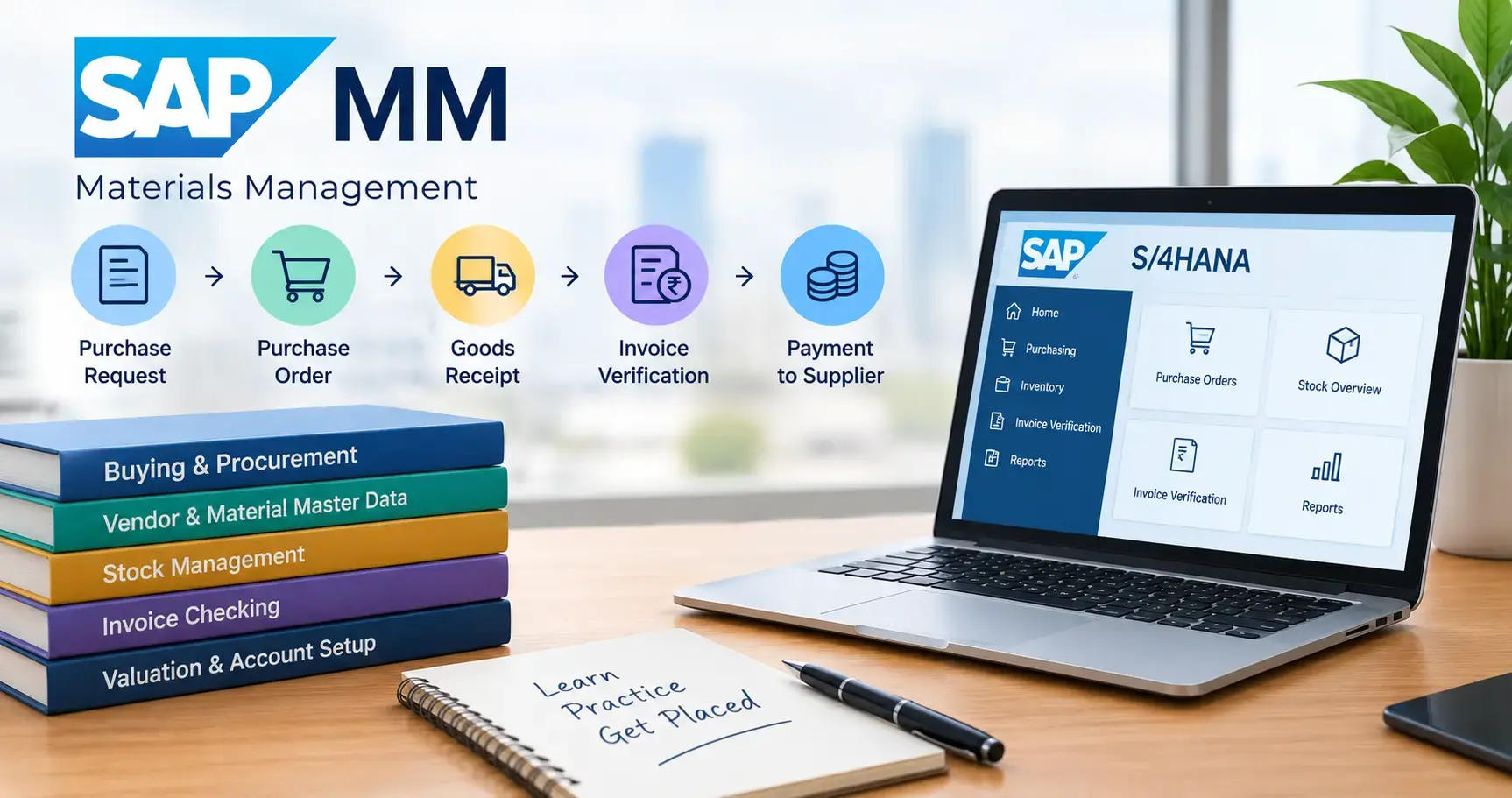
Choosing an SAP MM course in Bangalore with placement help is easier when you understand what the course should cover and what the placement promise really means. SAP MM (Materials Management) is the module that manages a companys buying and stock. It is one of the most popular functional paths for new graduates and people already working. This guide goes through the syllabus topic by topic the real-life project you should expect what has changed in S/4HANA the job positions that come after and how placement help works at MNP Technologies.
SAP MM is the SAP module for buying and keeping stock. A good SAP MM course covers buying, vendor and material master data, stock management, invoice checking and value and ends with a hands-on buying project. It does not need any coding and placement help means support with resumes, practice interviews and introductions not a promise of a job.
What is SAP MM? Procure-to-pay in terms
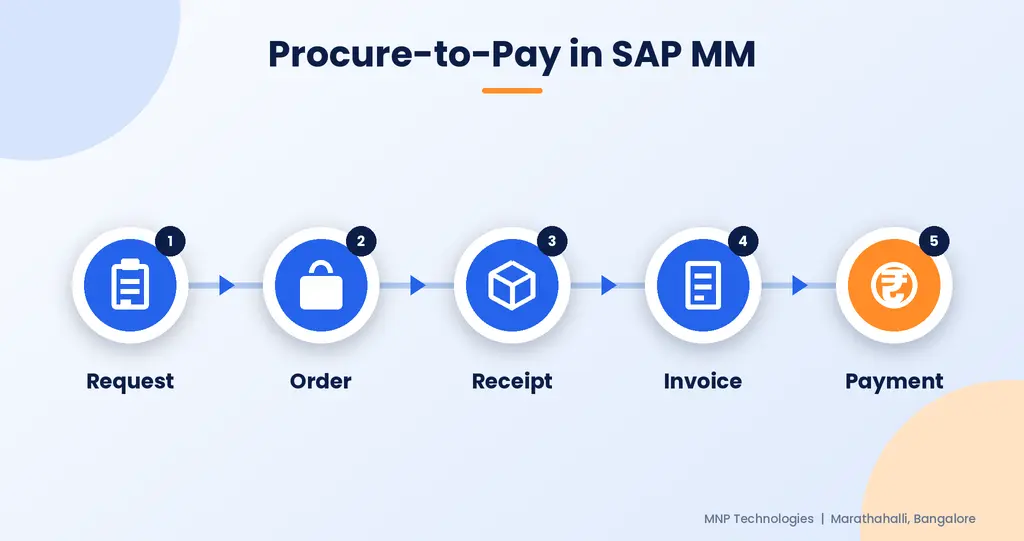
SAP MM handles everything a company does to buy goods and keep them in stock. Imagine a factory that needs materials, a shop that restocks shelves or a hospital that orders supplies. Someone asks for something a purchase order goes to a supplier the goods arrive the bill is checked and the supplier is paid. SAP MM keeps track of each of those steps.
This process is called procure-to-pay and people who search “what is procure to pay in SAP MM” are asking about this flow:
- A team asks for what they need.
- Buying turns that into an order for a chosen supplier.
- The warehouse records the arrival of the goods.
- The finance team checks the bill. Matches it with the order and receipt.
- Money is sent to the supplier.
MM is at the center of the supply chain and links with finance, sales and making. That is why companies in manufacturing, shops, medicine and services all hire people who understand it. If you are still looking at modules our guide on which SAP module to learn helps you decide.
SAP MM syllabus: topic by topic breakdown
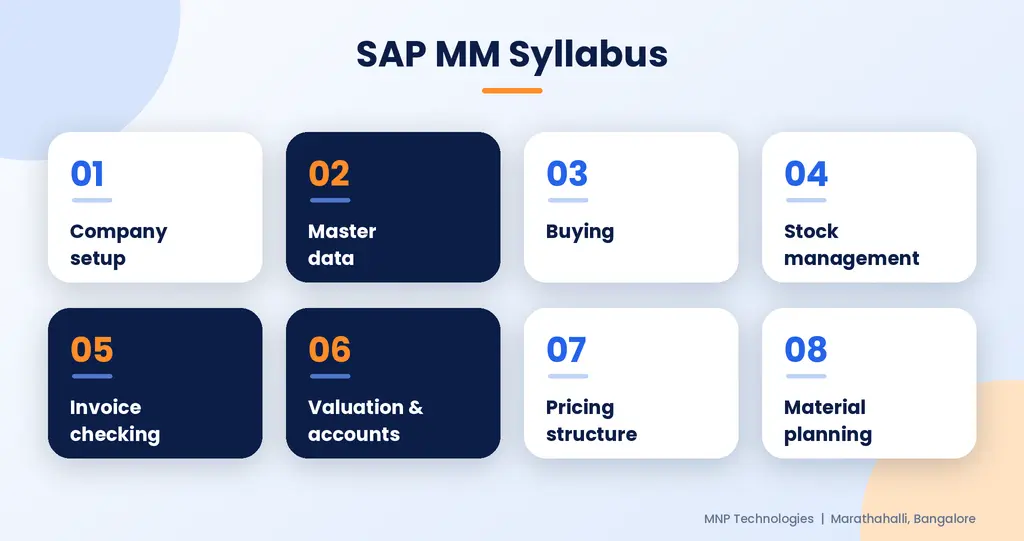
If you want the SAP MM syllabus for beginners here is what a structured SAP MM module training in Bangalore should have. The exact order can change by school. The topics should not.
- Company setup. Company code, plant, storage location, purchasing department and purchasing team. These define where and how your company buys and stores goods.
- Master data. Material master, vendor master, purchasing data and source lists. Most real-world issues in SAP come from master data so a good teacher spends time on this.
- Buying. Purchase requests, request for quotes, quotes, purchase orders, agreements such as contracts and delivery plans and approval methods.
- Stock management. Receiving goods sending goods moving stock, transfers, reservations and checking stock.
- Invoice checking. Entering supplier bills checking three ways handling price and quantity differences and understanding the GR/IR clearing account.
- Valuation and account setup. How the value of the material is calculated ( price or moving average price) and how stock changes automatically post to the right finance accounts.
- Pricing structure. Types of conditions records of conditions and the pricing structure that sets the buying price.
- Basics of material planning. How the system suggests what to order and when.
A course that misses valuation or account setup will have holes because that is where MM meets finance. Compare the syllabus line by line before you sign up.
Real-time project: a buying process in SAP
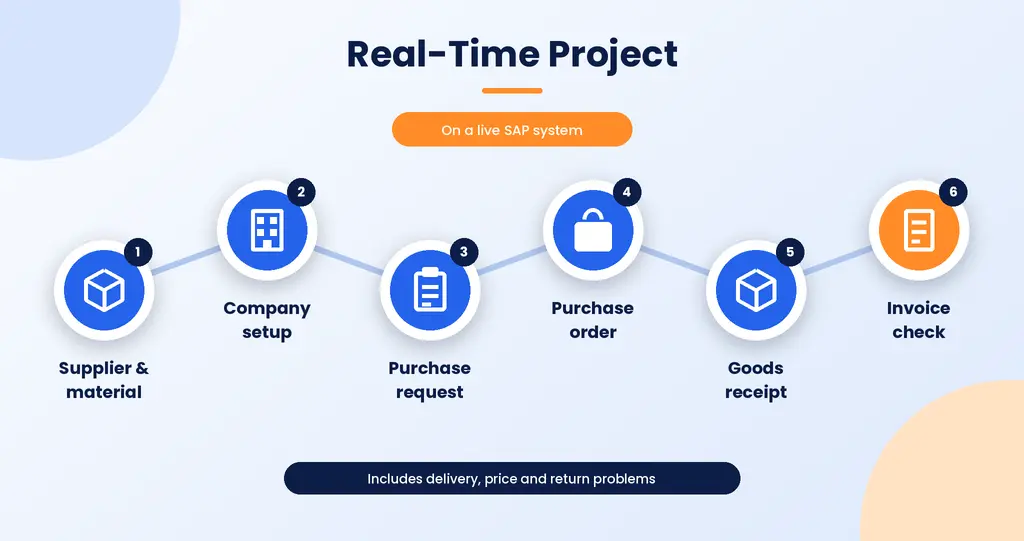
Many students search for real-time SAP MM training in Bangalore but the term means little unless you know what the project includes. A real-time project should guide you through a business cycle on a live SAP system, not just pictures.
A strong project looks like this. You make a supplier and a product set up the company structure make a buying request and change it into a buying order with the pricing. You record the arrival of the goods then check the supplier bill and clear it. Finally you check how each step affected stock and finance accounts. You also handle problems, like a delivery a price difference or a returned item.
This kind of project is what interviewers ask about. Our post on how real projects help you pass IT interviews explains why actual work makes your answers more believable. When you go to a demo ask the teacher to describe the project steps. A clear answer is a sign.
SAP MM in S/4HANA: what is different
Most companies are switching from SAP ECC systems to S/4HANA so any SAP MM course in Bangalore should include the important changes. The main process stays the same. Purchase request, purchase order, goods receipt and invoice checking still work as before. What changes is how the system deals with data and how people use it.
The main changes include:
- Business Partner. Suppliers are managed through the Business Partner system of separate supplier records.
- Simpler data setup. Material records are stored in a straightforward way, which makes reporting faster.
- Fiori apps. Many daily tasks now use web-based Fiori apps along with screens.
- Live reporting. Stock and buying numbers can be read in time without long batch reports.
If you want to know more about the platform see the SAP S/4HANA Logistics course. The safest way is to learn the MM processes first and then add S/4HANA details on top.
Job positions and skills after SAP MM
New graduates often look for SAP MM job positions for graduates and the honest truth is that job titles can vary by company. Common jobs include SAP MM support analyst, entry-level SAP MM consultant, purchasing or buying analyst with SAP skills and supply chain analyst. Always check job listings in Bangalore to see which titles and skills companies are asking for right now.
Skills that make you stand out:
- A good understanding of the buy-to-pay cycle
- Comfort with master data and account setup
- The ability to track a transaction from request to payment
- Basic knowledge of how MM connects with sales and finance
- Clear speaking because functional consultants talk to business users every day
MM also works well with modules over time. The question “SAP MM versus SAP SD which is better?” has no answer. MM covers the buying side and the SAP SD course covers the selling side with sales orders, delivery and billing. Many consultants learn both because the two work closely. Choose the one that fits your background then add the later.
How placement help works at MNP
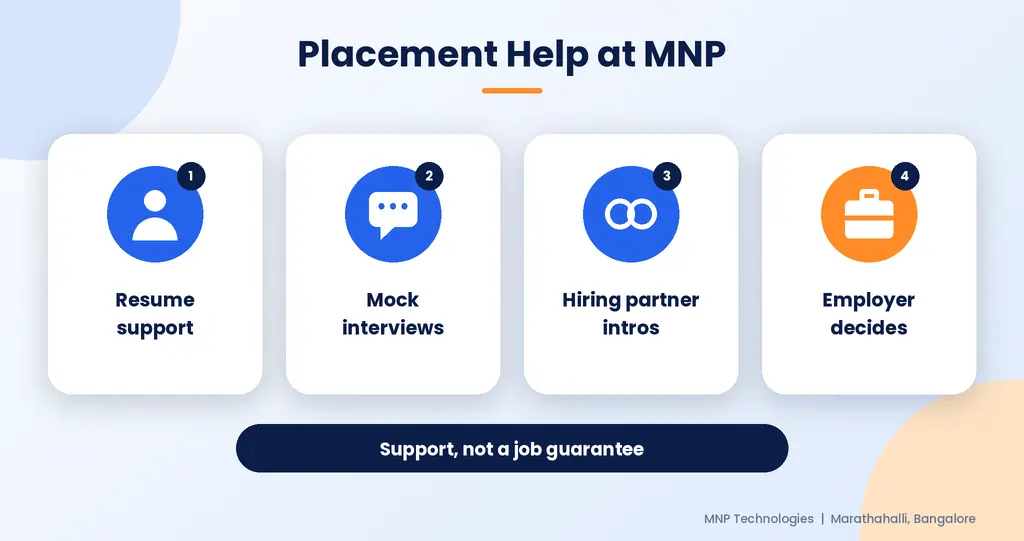
The phrase “SAP MM training Institute in Marathahalli, Bangalore with 100% placement” is in ads so it is worth being clear about what it means. Placement help is support, not a promise. Hiring decisions always come from employers.
At MNP Technologies placement help includes resume support, practice interviews and introductions through hiring partners. Final choice depends on your interview performance.
When you compare SAP MM training in Bangalore or any SAP MM classes in Bangalore ask these questions:
- What exactly is included in placement help?
- Are practice interviews part of the course?
- Can you show placement results?
- Who handles referrals and how do they work?
An institute that answers these clearly is usually more trustworthy than one that just repeats a percentage.
Many students also search for SAP MM course fee in Bangalore. Course fee depend on the class type, teacher, time and inclusions like SAP system access and placement help. Ask for a written cost breakdown of just comparing the top price.
For SAP MM training in Marathahalli, Bangalore MNP Technologies lists its SAP training at 10 to 12 weeks with classes during the week and on the weekend. A choice of in-person or live online learning. If you prefer SAP MM course in Marathahalli check that sessions are live and that you get SAP system access for practice. If you prefer in-person our center is at Marathahalli Bridge, near the Outer Ring Road tech parks, which suits anyone looking for SAP MM training in Marathahalli.
The best way to judge quality is to attend a class first. Book a free demo class to meet the trainer, review the syllabus and decide if the course fits your goals.
FAQs
What is SAP MM?
SAP MM (Materials Management) is the SAP module that handles buying and keeping stock: purchase requests, purchase orders, goods receipt, invoice checking and stock control. It is a part of the buy-to-pay process in companies, in manufacturing, shops and services.
What will I learn in a SAP MM course?
A syllabus covers company setup, material and vendor master data, buying, stock control, invoice checking, valuation and account setup and pricing methods usually with a practical project. Many courses also include S/4HANA changes.
Who should take SAP MM?
Graduates, students and engineers plus people working in buying, purchasing, stores, supply chain or logistics. Previous ERP experience is not needed, though knowing how buying and stock work makes the ideas easier to understand.
Does SAP MM need coding?
No. SAP MM is a module focused on setup and business steps. Basic understanding of ABAP debugging or SQL can help in support roles. It is not a requirement to start the course.
What jobs can I get after a SAP MM course?
Common roles include SAP MM support analyst, junior SAP MM consultant, procurement or purchasing analyst with SAP skills and supply chain analyst. Titles and openings vary by company and experience so check job listings.
What is the difference between SAP MM and SAP SD?
SAP MM covers the buying side: procurement and inventory. SAP SD covers the selling side: sales orders, delivery and billing. The two integrate closely in the supply chain. Many professionals learn both over time.
Does MNP Technologies offer placement support for SAP MM?
MNP Technologies offers placement assistance including resume building, mock interviews and referrals through hiring partners. Final selection depends on your interview performance. Placement support is assistance rather, than a job guarantee.

